Social media approval process: a simple one that holds
A social media approval process is the set of steps a post goes through between being written and being published, with one named person signing it off. The simplest version that works has five steps: draft, self-check, stage, approve, publish, and a rule that a post nobody approves never goes out.
The approval itself is the easy part. What makes a process hold is that the person writing cannot also be the person approving, and that "publish" is impossible until the sign-off exists.
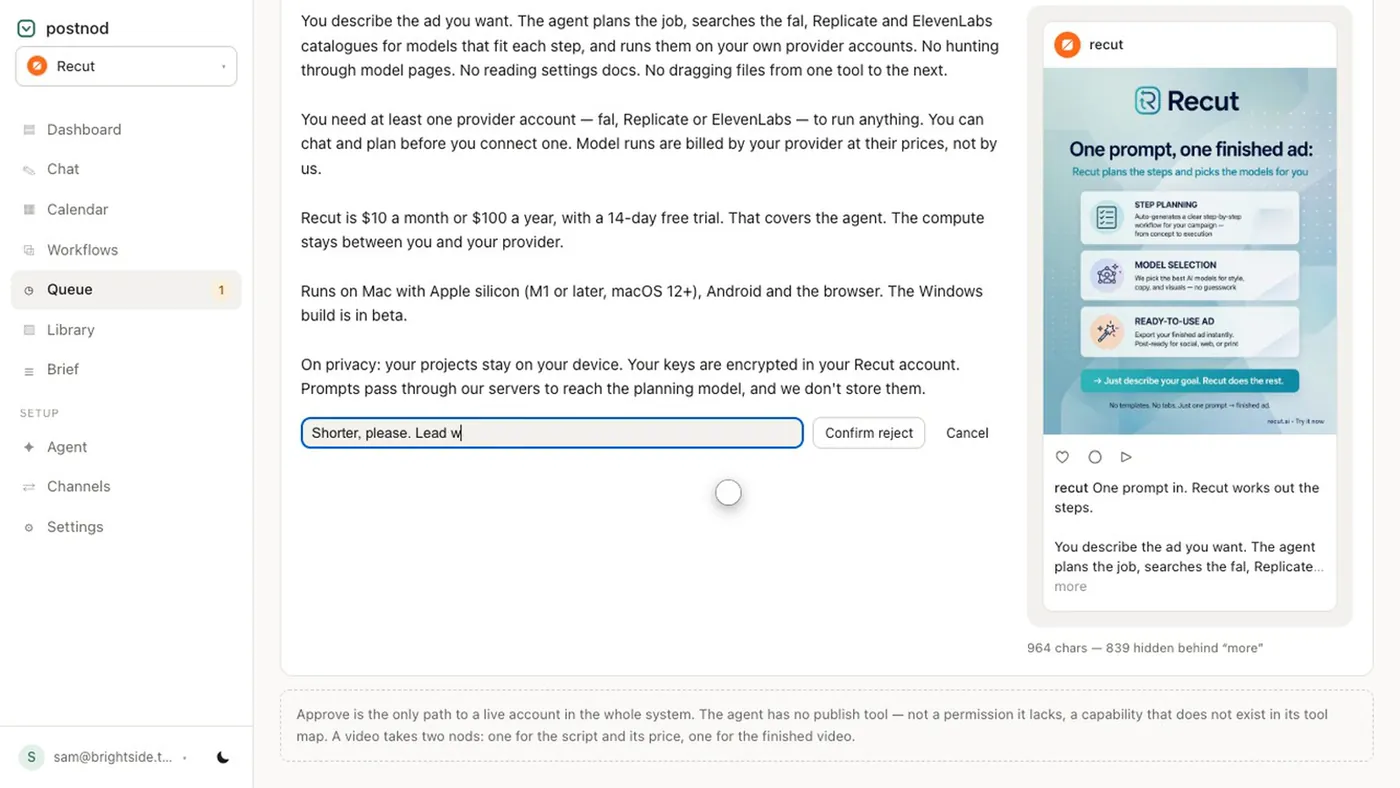
The five steps
- Draft. Someone writes the caption and picks or makes the image, working from a content calendar rather than from a blank page.
- Self-check. The writer checks the draft against the brand rules before anyone else sees it: length for each platform, banned words, claims the brand cannot make, links that work, the crop of the image.
- Stage. The finished post goes into one place where approvers look, with the platform, the date and time, and a preview of how it will actually appear.
- Approve, edit or reject. One named person signs it off, changes it, or sends it back with a reason. The sign-off is recorded: who, and when.
- Publish. Only an approved post goes out, at the time that was approved, from the account that was approved.
Most teams already do steps 1 and 5. The trouble lives in the middle: approvals given in a chat thread nobody can find later, a "looks good" on an earlier version, or a scheduled post that was never actually reviewed.
Who should approve
Pick the approver by what could go wrong, not by seniority.
| Kind of brand | Who signs off | What they are really checking |
|---|---|---|
| Clinic, dentist, physio, pharmacy | A clinician or the practice manager | No treatment or outcome claims, no patient information, consent for any photo |
| Agency client account | The client contact, not the account manager | Facts about their business, prices, offers, tone |
| Charity, church or counselling service | A trustee or the lead for safeguarding | Nothing that uses distress, grief or guilt to persuade |
| Consumer app or small business | The owner or the person who owns the product | Features that exist, prices that are current |
Separate the two jobs. The person who writes the post should not be able to approve it, and the person who approves it ideally should not be rewriting it in the approval step. If the approver changes the post, the change should be visible, and a large change should go back round.
What to check before you approve
- It is true today. Prices, opening hours, offers, availability. A post is often written a week before it goes out.
- It makes no claim you cannot back up. "Best in town", "guaranteed", "pain-free", "clinically proven".
- It fits the platform. The first line still makes sense when the rest is hidden behind "more"; the image is not cropped through a face or a headline. See Instagram post size and social media character limits.
- It shows nobody who has not agreed. Staff, customers and especially patients. See patient photos and consent.
- It is going to the right account at the right time. Agencies with several clients make this mistake more than any other.
Stop the silent post
The most damaging failure is not a bad post that someone approved. It is a post that went out because it was scheduled and nobody looked. Two rules prevent it:
- A post with no approval cannot be published. Not "should not": cannot. The scheduling tool should have no path from draft to live that skips the sign-off.
- An approval request that nobody answers expires. If nobody has looked at a post in, say, three days, it should lapse rather than go out at its scheduled time.
If your current tool lets any editor press "publish now", your approval process is a convention, not a control. That is fine for one person posting for their own business, and risky for anyone posting on behalf of a clinic or a client.
A process for one person
If you run your own social media, you are writer and approver at once. You can still get most of the benefit by separating them in time: write on Monday, approve on Tuesday with fresh eyes, and never approve something in the same sitting you wrote it. A preview on a phone-sized screen catches more than reading the caption in a text box.
Questions people ask
What is a social media approval process?
It is the agreed route a post takes from draft to published, with a named person signing it off before it goes out. A good one records who approved what and when, and makes publishing impossible without that approval.
How long should social media approval take?
Plan for one working day per post and batch them: approvers who see a week of posts at once on Monday answer faster than approvers pinged for each one. Set an expiry so an unanswered request lapses instead of publishing.
Should the person who writes the post approve it?
Not for a business that posts on behalf of clients, patients or members. Splitting the writer and approver roles is the single change that catches the most mistakes. In Postnod an editor can write but cannot approve, and an approver can approve but cannot write.
Do I need a tool for social media approvals?
Not for a handful of posts a month; a shared document and a rule will do. Once you post for several brands or need a record of sign-off, a tool that blocks publishing until approval is safer than a convention. See what to look for in a social media approval tool.
Try it on one brand
Postnod reads your website, drafts posts in your brand’s voice, checks them against your rules and waits for your nod. Nothing is posted until a person approves it. Free for one brand.
Related guides
Approval and workflowSocial media approval workflow for agencies and their clientsApproval and workflowSocial media approval tool: what to look for before you choose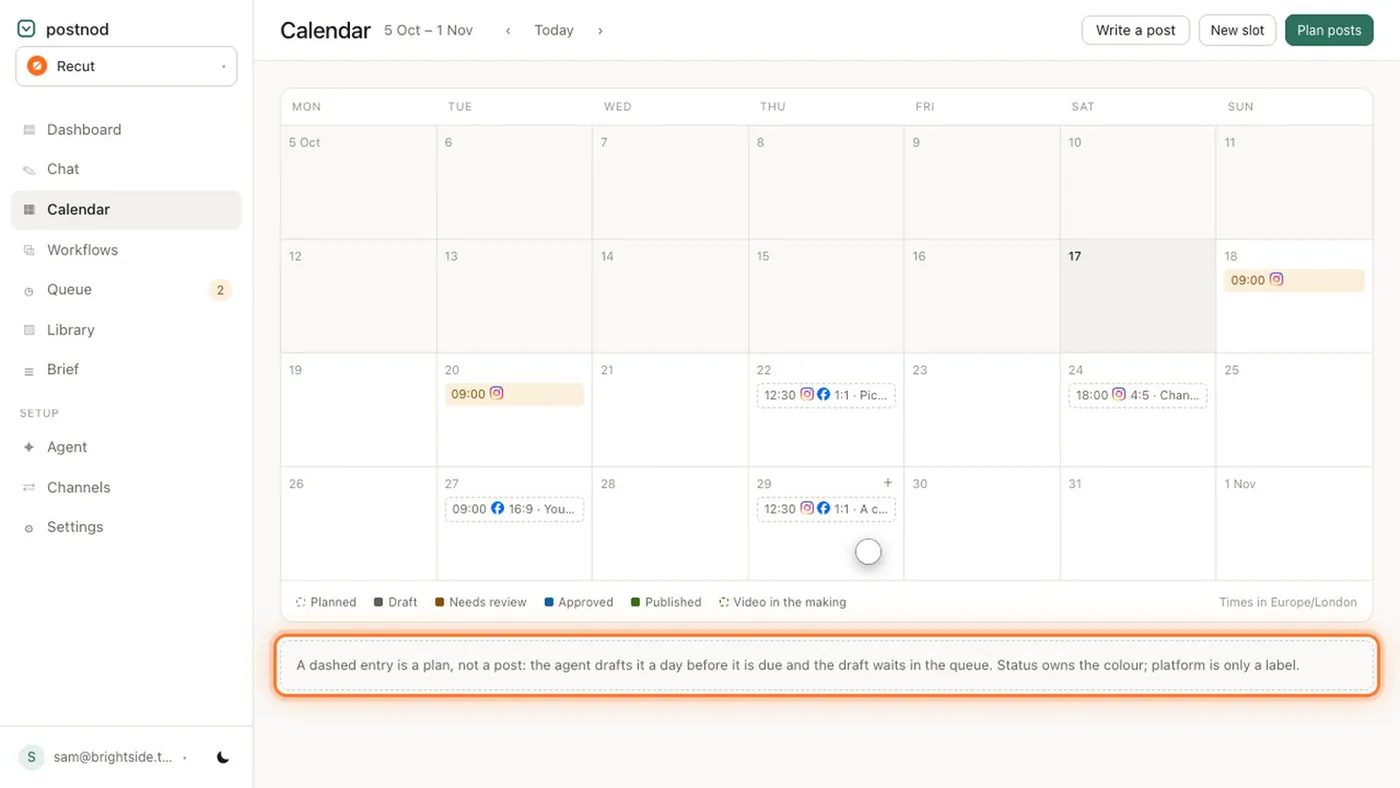 Planning and calendarsSocial media content calendar: what goes in it and how to build one
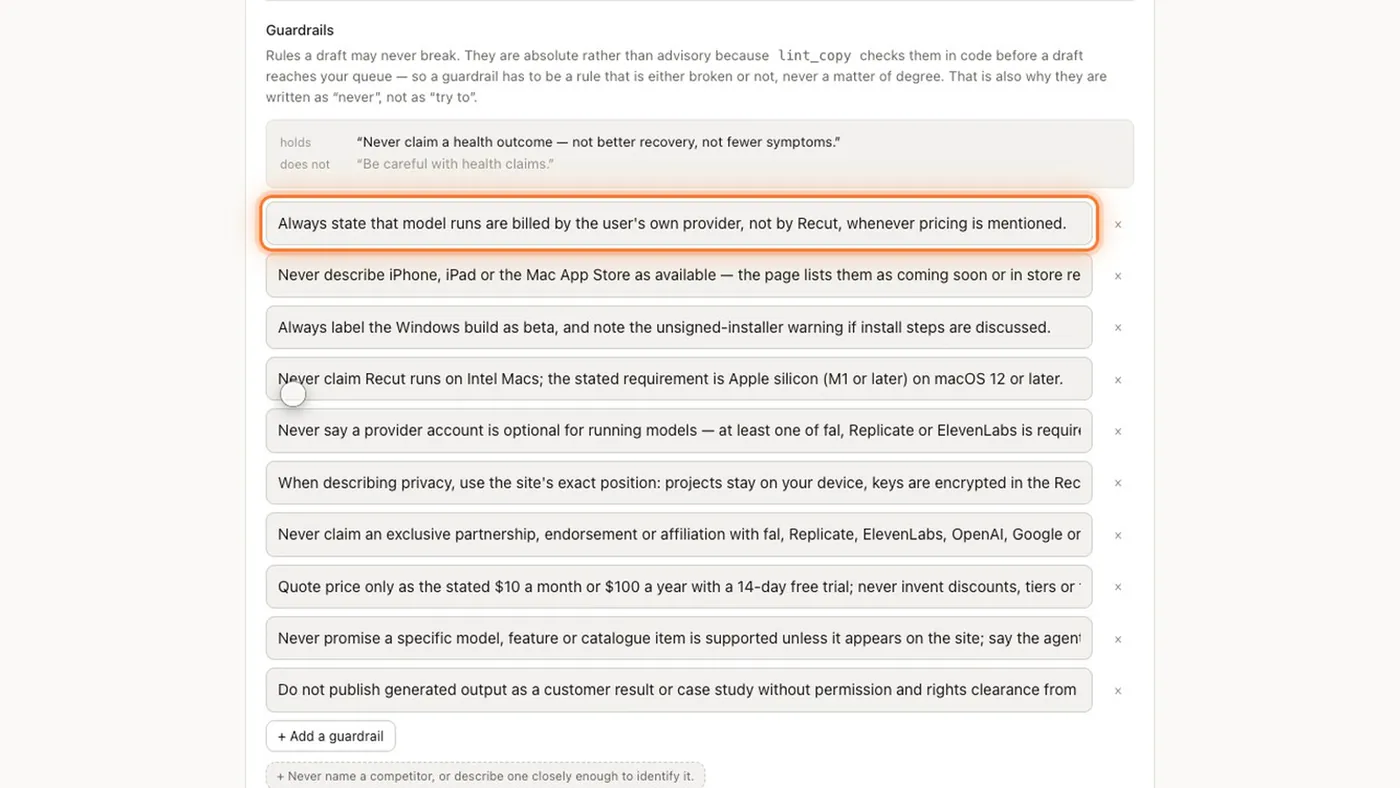 Rules for regulated brandsSocial media guidelines for healthcare: what clinics can post