Social media approval workflow for agencies and their clients
A social media approval workflow for an agency is the agreed route a client’s post takes from your team’s draft to the client’s sign-off to publishing. The version that holds up has separate roles (your team writes, the client approves), batched requests (a week of posts at once, not one ping per post), an expiry for posts nobody answers, and a record of who approved what and when.
The point is not bureaucracy. It is that when a client says “we never agreed to that”, you can show the approval, and when a client goes quiet, nothing goes out in their name unchecked.
Roles: who can do what
Most approval problems in agencies come from roles that overlap. If an account manager can both write and approve, the client’s sign-off becomes optional in practice. Split the jobs.
| Role | Who it is | Can write | Can approve |
|---|---|---|---|
| Editor | Your copywriter, designer or social media manager | Yes | No |
| Approver | The client contact, or a clinician or compliance lead on their side | No | Yes |
| Admin | Your account lead | Yes | Yes, for emergencies only, and visibly |
| Viewer | Anyone who needs to see the plan but not touch it | No | No |
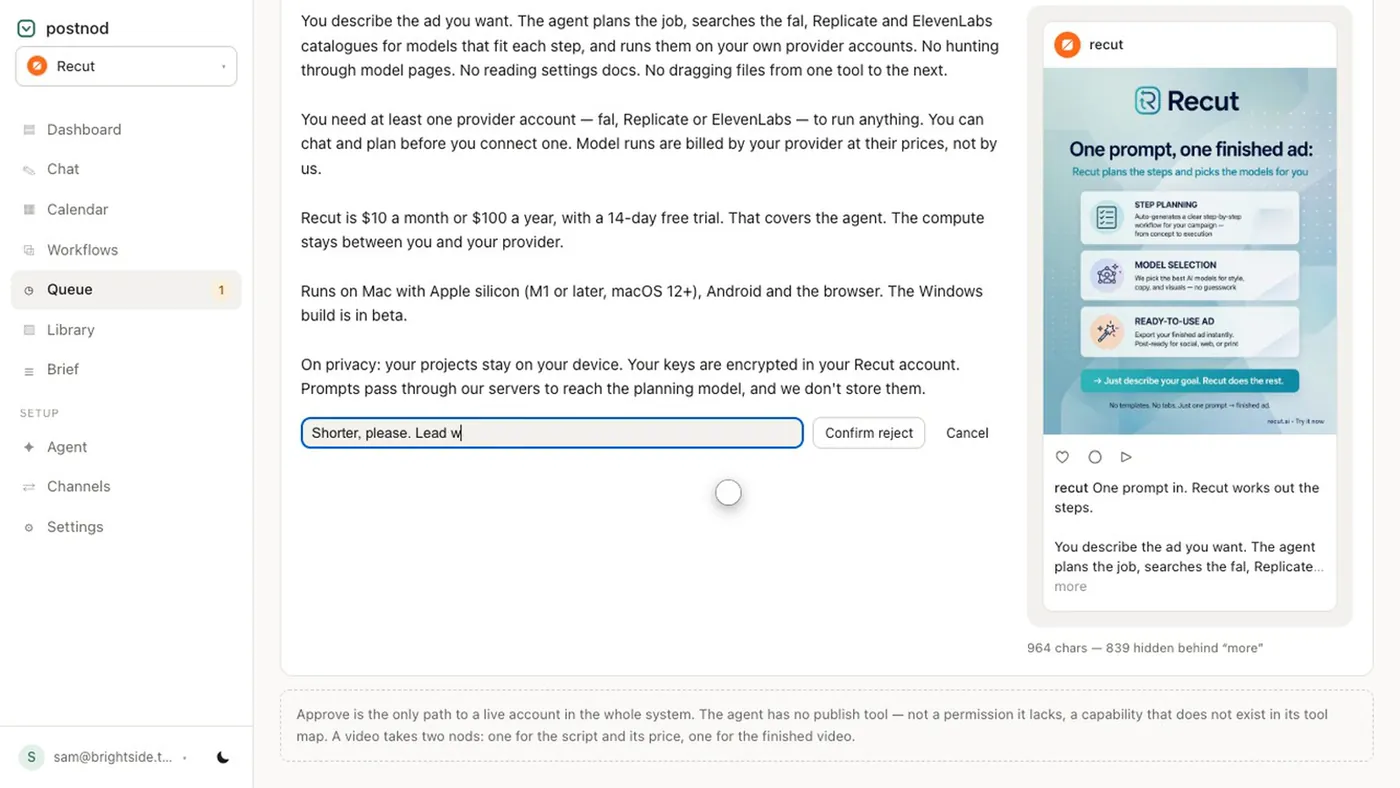
The approver who can only approve matters most. Clients do not want to learn a scheduling tool, and you do not want a client quietly rewriting a caption that then goes out without your team seeing it. If the client wants a change, they reject with a note and your editor makes it.
The weekly rhythm
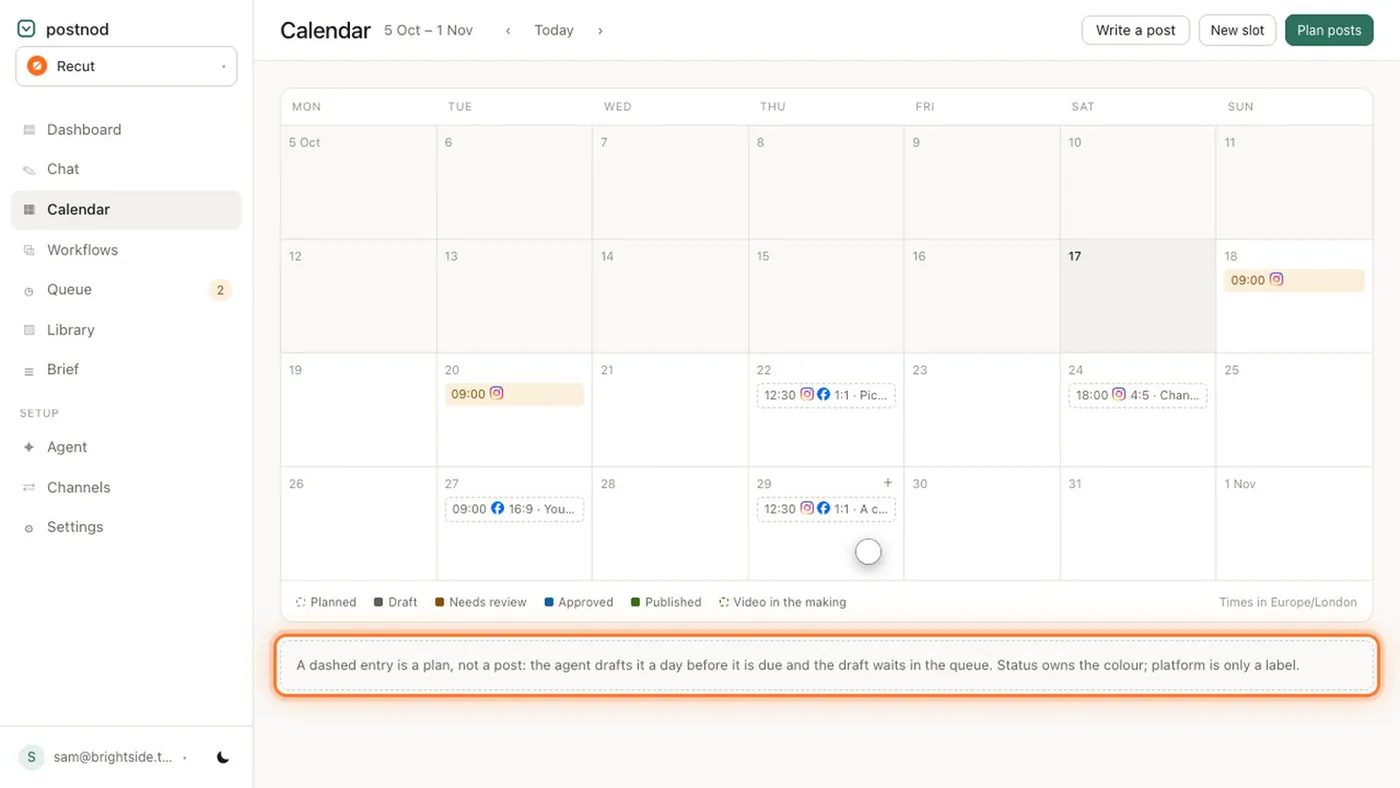
- Agree the calendar monthly. The client approves topics and dates for the month in one meeting or one document. Approving posts later is quicker when nothing is a surprise.
- Draft a week at a time. Your team writes the following week’s posts by Thursday.
- Send one batch. On Friday the client gets one request with every post for the coming week, each shown as it will look on a phone.
- Client approves, edits or rejects with a note. Ask for answers by Monday midday.
- Fix and resubmit rejected posts the same day. A heavily changed post goes back round; a typo fix does not.
- Approved posts go out at their approved time from the approved account.
Batching is what keeps clients responsive. One request a week with seven posts gets answered; seven separate notifications get ignored.
When the client goes quiet
Every agency has had a client who stops answering. There are two bad defaults: posting anyway because it was scheduled, or posting nothing and then being blamed for the gap.
- Write the rule into the contract. “Posts not approved within three working days are not published.” Agree it up front so nobody argues later.
- Make the tool enforce it. An unanswered approval request should lapse, not publish at its scheduled time.
- Name a deputy approver on the client side for holidays and sick days.
- Keep a few evergreen posts approved in advance so a quiet week is not an empty one.
Several clients, one team
With multiple brands, the worst mistake is not a bad post but a good post on the wrong account. Keep each client’s channels, brand rules and banned words separate, and make sure nobody can publish one client’s post to another client’s page by picking the wrong account in a drop-down.
A short brand guidelines document per client, including words they never use and claims they cannot make, saves most of the back-and-forth in approval. For clinics and other regulated clients, read healthcare social media guidelines and agree who on their side signs off clinical content.
Postnod is built around this: each brand has its own agent that holds only that brand’s channels and rules, so it cannot post to another client’s account. Editors write and run the agent but cannot approve; approvers can approve but cannot write; and a post nobody looks at for three days lapses. The Agency plan ($149 a month) covers up to 10 brands and lists approvers who can only approve.
Questions people ask
How do agencies get client approval for social media posts?
Most agree the monthly calendar first, then send one batch of the next week’s posts for sign-off, shown as they will appear. The client approves or rejects each post with a note, and only approved posts are scheduled.
What should happen if a client does not approve a post in time?
It should not go out. Agree in the contract that unapproved posts lapse after a set period, and use a tool that enforces it rather than relying on someone remembering.
Should clients be able to edit posts themselves?
Usually not. Ask them to reject with a note and let your team make the change, so every published version has passed through the people responsible for it.
How do I manage approvals for multiple clients?
Keep each client in its own workspace or brand with its own channels, rules and approvers, so a post can only be approved by that client and published to that client’s accounts.
Try it on one brand
Postnod reads your website, drafts posts in your brand’s voice, checks them against your rules and waits for your nod. Nothing is posted until a person approves it. Free for one brand.
Related guides
Approval and workflowSocial media approval process: a simple one that holdsApproval and workflowSocial media approval tool: what to look for before you choose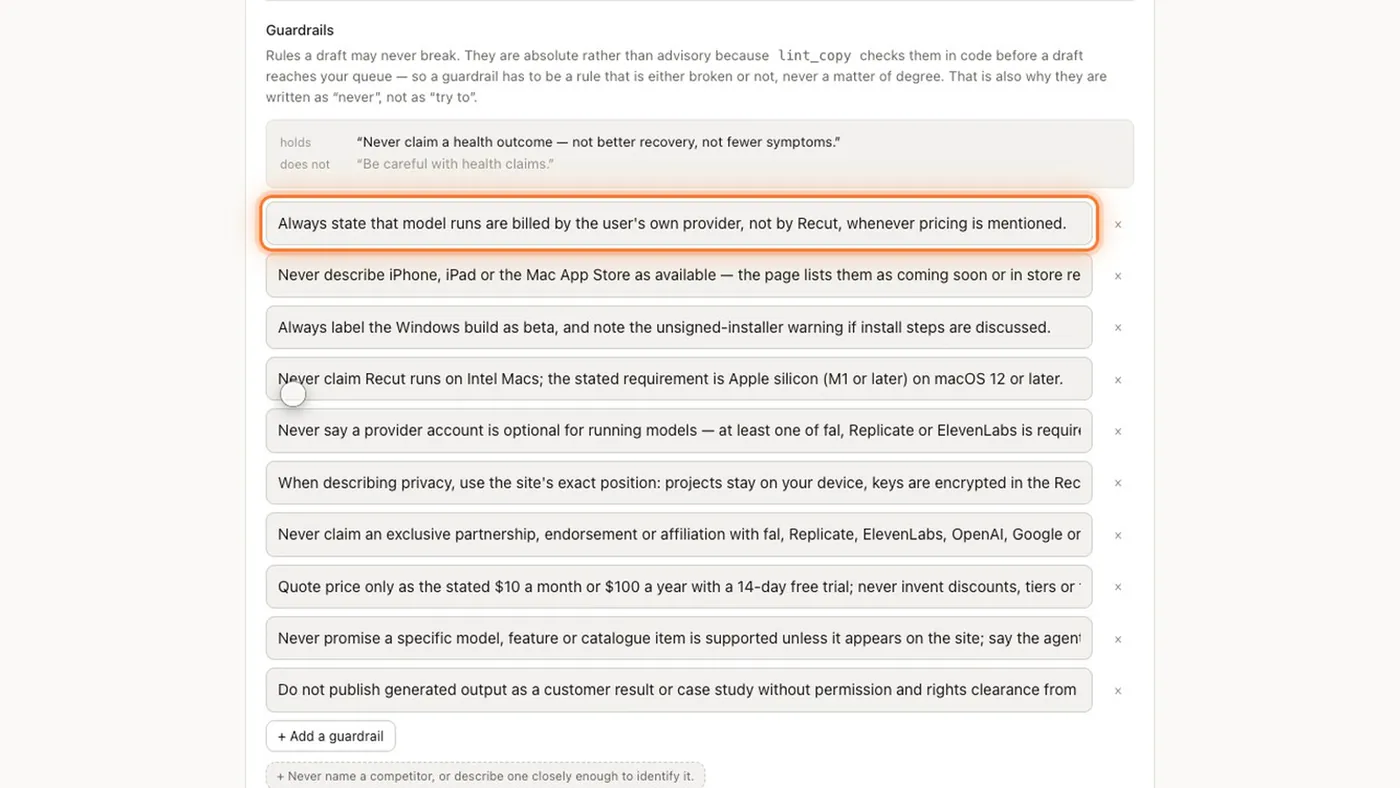 Rules for regulated brandsSocial media brand guidelines, with a template you can copy
 Planning and calendarsSocial media content calendar: what goes in it and how to build one