Social media for vet clinics: 30 post ideas
Social media for a vet clinic works best when it shows the team, explains what happens at the practice, and shares practical pet care information by season. Below are 30 specific ideas grouped by theme. Pets are your best content, but they belong to clients.
In the UK, the RCVS says vets and nurses should not post anything that could identify a client or their animal, or post pictures of treatment, without the client’s explicit consent; see its guidance on social media. In the US, check your state veterinary board. Rules vary, so check yours.
Meet the team and behind the scenes (1–7)
| Idea | Format to try |
|---|---|
| 1. Meet each vet and nurse, with their own pets | Photo and caption |
| 2. The practice cat or dog, if you have one | Story |
| 3. The prep room before surgery starts, with nothing graphic | Photo |
| 4. How kennels are cleaned and set up for the day | Reel |
| 5. What a veterinary nurse does in a day | Carousel |
| 6. Reception: the busiest hour, and when to call instead | Text graphic |
| 7. A training day and one thing the team learned | Photo |
How-to and pet care (8–15)
Keep these general and end with “call us if you are worried about your own pet”.
| Idea | Format to try |
|---|---|
| 8. Getting a cat into a carrier calmly | Short video |
| 9. What to bring to a first appointment | Carousel |
| 10. Christmas foods to keep away from dogs | Carousel |
| 11. A reminder to keep microchip contact details up to date | Text graphic |
| 12. Brushing a dog’s teeth, with a willing staff dog | Reel |
| 13. Travelling abroad with a pet: where to find the official rules | Text post |
| 14. Fireworks season: setting up a quiet den | Carousel |
| 15. Hot weather: walks at cooler times, never leave a dog in a car | Text graphic |
FAQs (16–21)
| Idea | Format to try |
|---|---|
| 16. What a consultation costs, and your price list | Text graphic |
| 17. Do you see rabbits, reptiles or other exotics? | Story |
| 18. Who covers emergencies out of hours | Text graphic, pinned |
| 19. What your pet health plan includes and costs | Carousel |
| 20. Can I stay with my pet during the appointment? | Text post |
| 21. Why we need to see your pet before prescribing | Text post |
Practice news, seasonal and community (22–30)
| Idea | Format to try |
|---|---|
| 22. Pet of the month, with the owner’s written consent and their chosen name | Photo |
| 23. A new team member | Photo |
| 24. Holiday opening hours | Text graphic |
| 25. A rehoming charity you support | Reshare |
| 26. Puppy socialisation class dates | Text graphic |
| 27. A thank-you for cards from clients, with names only if agreed | Photo |
| 28. Work experience week for local students | Photo |
| 29. A new service or piece of equipment, in plain words | Photo |
| 30. Access: parking, separate cat and dog waiting areas | Carousel |
Getting consent for pet photos
- Ask in writing, at the visit. A tick box on the consent form, or a short message the owner replies to.
- Be specific. Which photo or video, which channels, and whether you will use the pet’s name or the owner’s.
- Record it alongside the clinical record, as the RCVS suggests, so whoever posts can check.
- Make withdrawal easy, and take the post down promptly if an owner asks.
- Check the background. No client names on screens, labels or kennel cards.
Posts to avoid
- Client animals without consent. A recognisable pet identifies its owner. Get written consent, record it, and let owners withdraw it. See patient photos on social media.
- Graphic surgery or injury images. They distress followers and the owner.
- Prescription-only medicines. In the UK, prescription-only veterinary medicines cannot be advertised to the public.
- Outcome promises about treatments or health plans.
- Public arguments. The RCVS suggests inviting an unhappy client to contact the practice directly.
- Grief used to sell. Never use a pet’s death to promote a plan or service.
How to plan a month of these
- Pick a rhythm, such as three posts a week, as a starting point to test.
- Put the season first: fireworks in autumn, heat in summer, toxic foods at Christmas.
- Each week add one team post and one FAQ or news post.
- Ask owners for consent at the time of the visit, not afterwards. A line on the consent form saves chasing.
- Lay it out on a content calendar, and have the practice manager or a vet approve the batch.
Questions people ask
What should a vet clinic post on social media?
Your team, the practice behind the scenes, seasonal pet care information, and practical news like hours, prices and emergency cover.
Do vets need consent to post photos of pets?
In the UK, the RCVS says yes: explicit client consent before posting anything that could identify a client or their animal, ideally recorded in the clinical record. Written consent is safest anywhere.
How should a vet practice respond to a negative review?
Stay calm, do not discuss the case publicly, and invite the client to contact the practice directly.
How often should a vet practice post?
Two or three times a week is a sensible starting point to test; see how often a business should post.
Try it on one brand
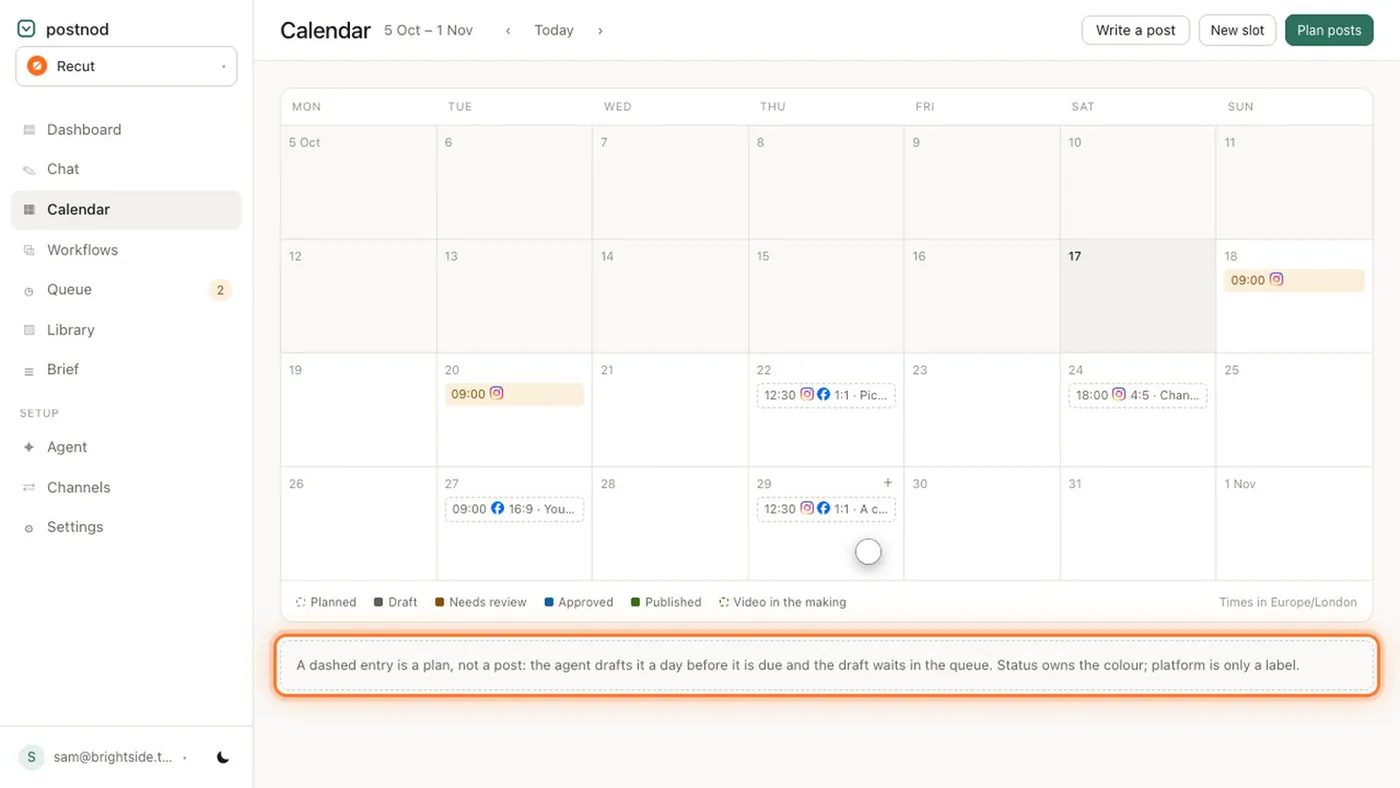
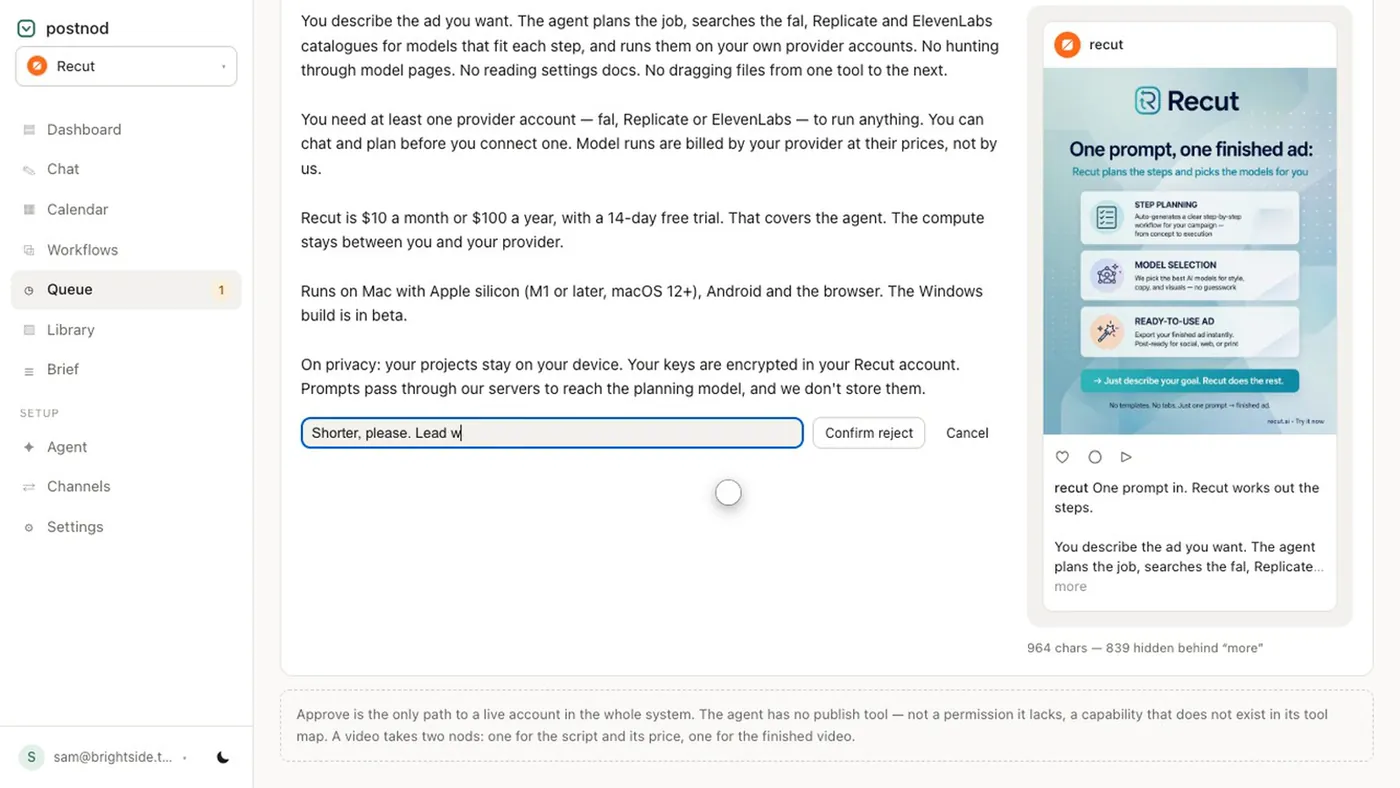
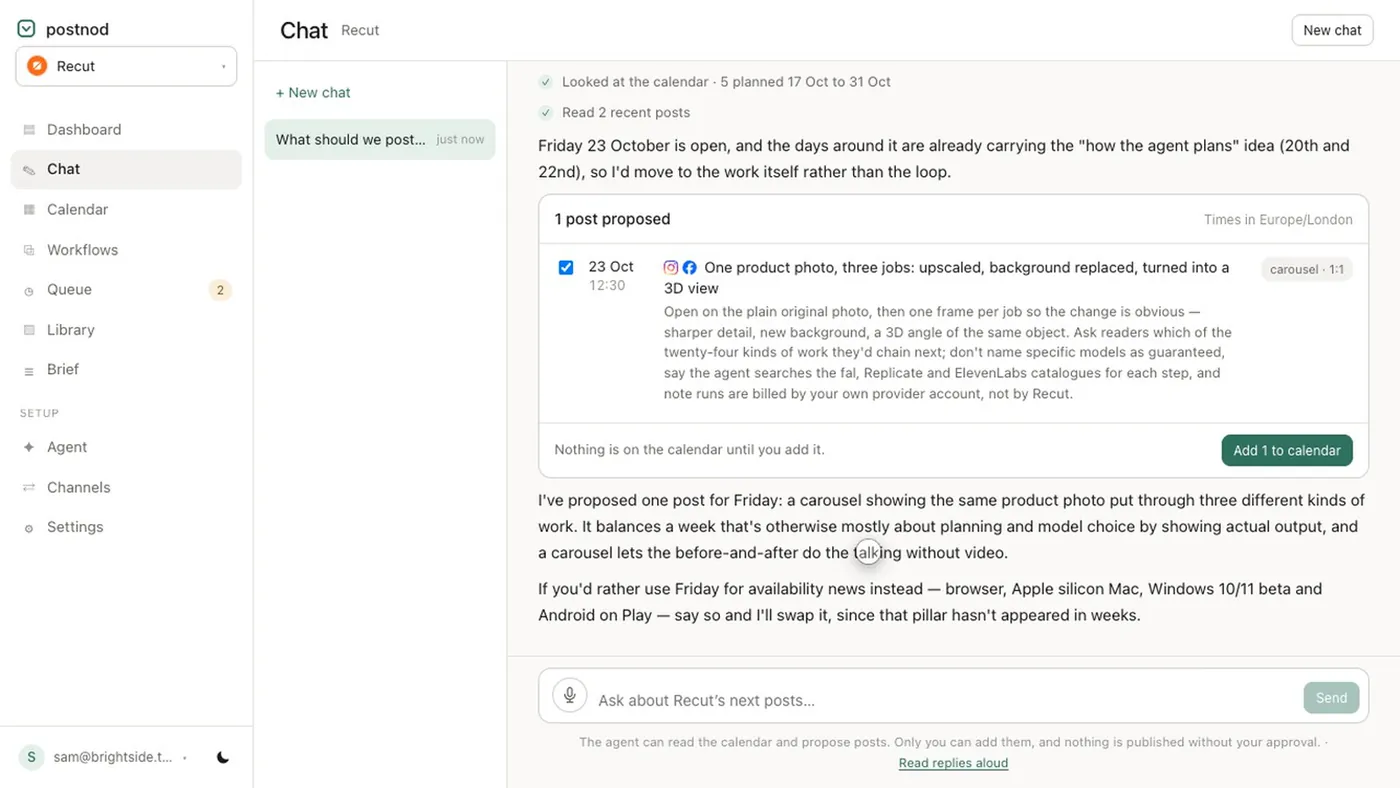
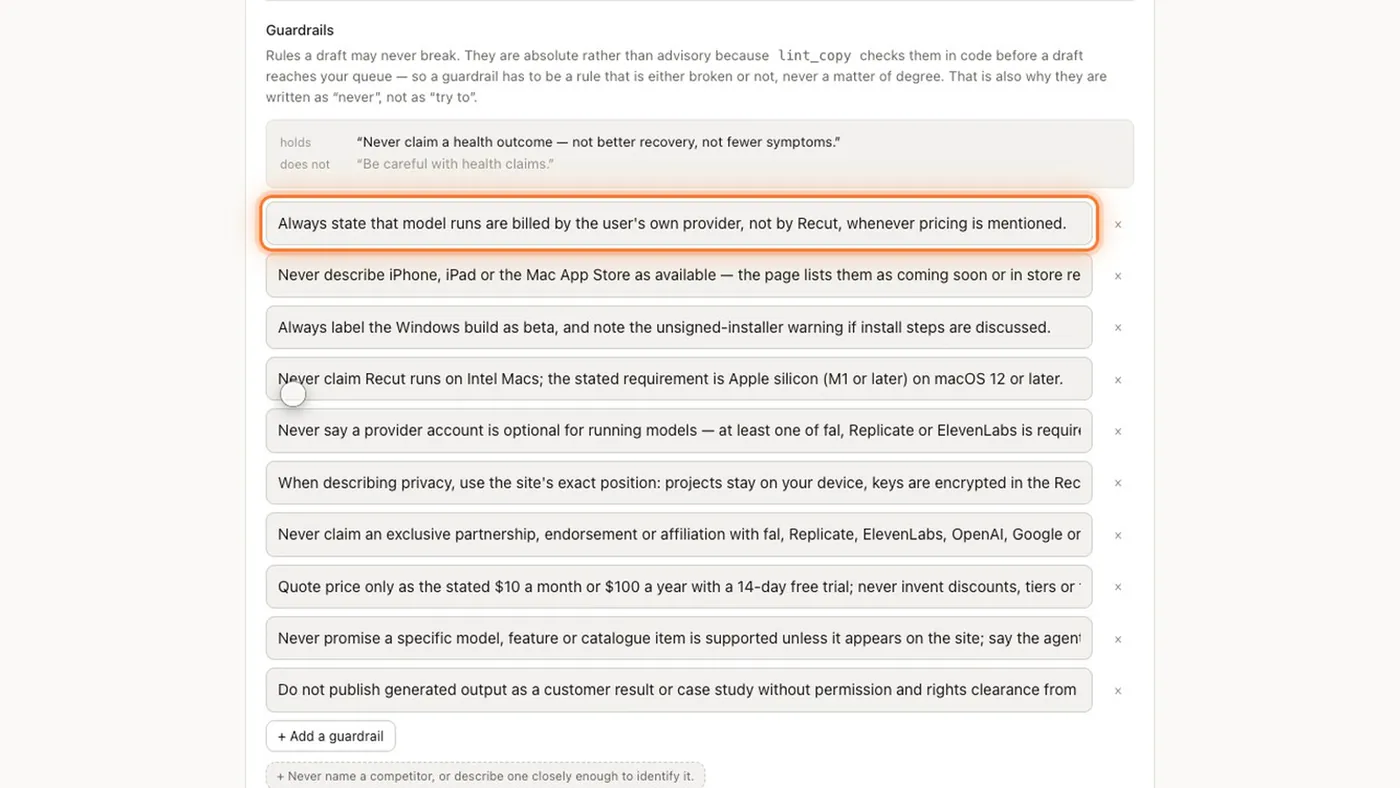
Postnod reads your website, drafts posts in your brand’s voice, checks them against your rules and waits for your nod. Nothing is posted until a person approves it. Free for one brand.
Related guides
 Rules for regulated brandsCan dentists and doctors post patient photos on social media?Planning and calendarsSocial media content calendar: what goes in it and how to build one
 Post ideas by tradeSocial media post ideas for small business: 30 for any trade
 Rules for regulated brandsSocial media guidelines for healthcare: what clinics can post