Physiotherapy social media post ideas: 30 for clinics
Good physiotherapy social media posts explain what physio is, show who your clinicians are and what a first appointment looks like, and share general movement and wellbeing information. Here are 30 specific ideas, grouped by theme, with a format for each. None of them promises a result.
Keep it general. A post is information, not a treatment plan for someone you have not assessed. In the UK, physiotherapists are regulated by the HCPC, which publishes guidance on using social media; in the US, state physical therapy boards set the advertising rules. Rules vary by country, so check yours.
Meet the team and behind the scenes (1–7)
| Idea | Format to try |
|---|---|
| 1. Meet each physio: training, areas of interest, one hobby | Photo and caption |
| 2. What happens at a first assessment, step by step | Carousel |
| 3. A tour of the treatment room and gym, and what each piece of kit is for | Reel |
| 4. Behind reception: how bookings, reminders and cancellations work | Story |
| 5. A course someone attended and one thing they took from it | Photo |
| 6. Why someone on the team became a physio | Quote card |
| 7. The small things: the clinic playlist, the plant, the coffee order | Story |
How-to and education (8–15)
Add one line to each: “general information, not advice for your injury; book in or speak to your GP if something hurts.”
| Idea | Format to try |
|---|---|
| 8. A desk set-up checklist: screen height, chair, breaks | Carousel |
| 9. A reminder to get up and move during the working day | Text graphic |
| 10. What to wear and bring to your first appointment | Carousel |
| 11. Warming up before a weekend run: the basics | Reel |
| 12. A gentle general mobility routine, with a “stop if it hurts” line | Reel |
| 13. What physiotherapy is, and what it is not | Carousel |
| 14. Gardening season: lifting and kneeling with care | Photo |
| 15. Common sayings about backs, posed as questions: “it depends, and here is what we look at” | Carousel |
FAQs (16–21)
| Idea | Format to try |
|---|---|
| 16. Do I need a referral? How it works at your clinic | Text post |
| 17. How many sessions will I need? Honestly: it depends on your assessment | Short video |
| 18. Physio, osteopath, chiropractor: the factual differences, without knocking anyone | Carousel |
| 19. Which health insurers you are registered with | Text graphic |
| 20. Can I bring someone with me, or ask for a chaperone? | Story |
| 21. How to cancel, and your cancellation policy in plain words | Story |
Clinic news, seasonal and community (22–30)
| Idea | Format to try |
|---|---|
| 22. New evening or weekend appointments | Text graphic |
| 23. Your team volunteering at a local run or sports club | Photo |
| 24. New Year: a “start slowly” post with no promise of results | Text graphic |
| 25. Marathon season: the services you offer runners | Carousel |
| 26. Icy pavements: walking safely in winter | Photo |
| 27. A workplace talk you gave to a local employer | Photo |
| 28. A thank-you to a gym or club you work with | Photo |
| 29. Access: ground floor, parking, changing space | Carousel |
| 30. Prices and how to book | Text graphic, pinned |
Posts to avoid
- Patient videos or “recovery journeys” without written consent. Even with consent, never present one person’s progress as typical. See patient photos on social media.
- Testimonials about getting better. UK advertising rules treat them as claims you must be able to back up; see the ASA on testimonials and endorsements.
- Promises. “Pain-free in three sessions”, “fix your back for good”, “cure”.
- Diagnosing in the comments. “Sounds like sciatica, book in!” Reply by inviting them to book an assessment or see their GP.
- Condition-specific exercise plans presented as right for everyone.
- Knocking other professions or other clinics.
How to plan a month of these
- Choose a rhythm you can keep, say three posts a week, and treat it as a starting point to test.
- Mix each week: one person or behind-the-scenes post, one education post, one news or FAQ post.
- Use the seasons. January, spring marathons and icy weeks give you ready-made reasons to post.
- Lay the month out on a content calendar before writing anything.
- Have a clinician approve every education post before it goes out. See the social media approval process.
Questions people ask
What should a physio post on social media?
Who your clinicians are, what an appointment involves, general movement and wellbeing information, and practical news like hours and prices. Keep anything clinical general and invite people to book for advice on their own situation.
Can physiotherapists post exercise videos?
Yes, as general information, with a clear line that it is not advice for a specific injury. If a patient appears, get their written consent first.
Can I share patient reviews on my clinic’s Instagram?
Only with the reviewer’s permission, and be careful with reviews that describe getting better: UK advertising rules treat those as claims you must be able to back up.
How often should a physio clinic post?
Two or three times a week is a sensible starting point to test. See how often a business should post.
Try it on one brand
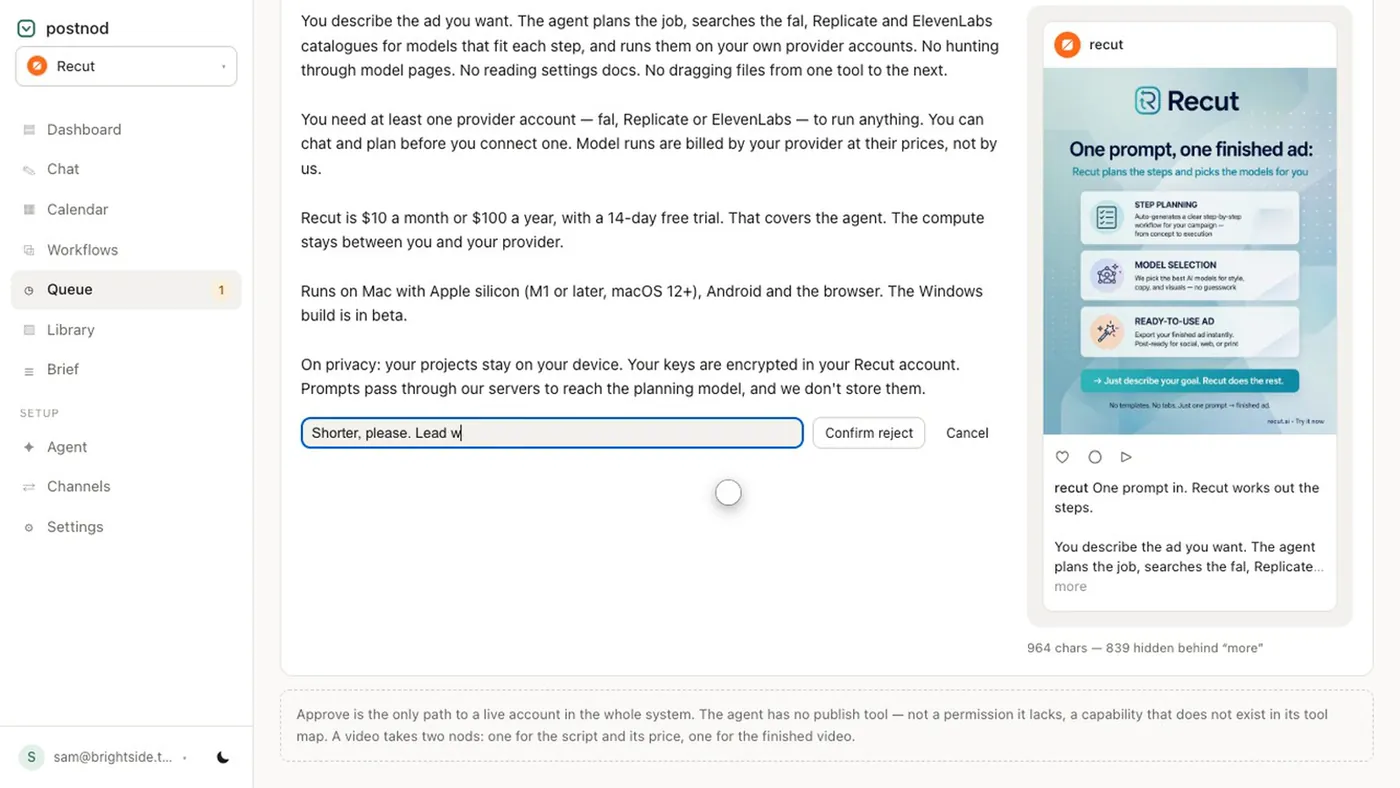
Postnod reads your website, drafts posts in your brand’s voice, checks them against your rules and waits for your nod. Nothing is posted until a person approves it. Free for one brand.
Related guides
 Rules for regulated brandsSocial media guidelines for healthcare: what clinics can post
 Rules for regulated brandsCan dentists and doctors post patient photos on social media?Post ideas by tradeGym social media post ideas: 30 without transformation promisesPlanning and calendarsSocial media content plan: pillars, mix and a monthly template