Dental social media post ideas: 30 that stay within the rules
The best dental social media posts show the people, rooms and routines of your practice, and explain everyday dental care in plain words. Below are 30 specific ideas grouped by theme: meet the team, behind the scenes, how-to, FAQs, practice news, seasonal and community. None of them relies on a treatment promise.
What you leave out matters as much. In the UK, the General Dental Council’s advertising guidance says a promotion on social media must make clear the treatment may not suit every patient and depends on an assessment. In the US, the ADA Code of Ethics and your state dental board set the rules. They vary by country, so check yours.
Meet the team and behind the scenes (1–8)
| Idea | Format to try |
|---|---|
| 1. Each team member: name, role and one thing they do outside work | Photo and caption |
| 2. What a dental nurse does between two appointments | Short video |
| 3. The decontamination room: how instruments are cleaned and sterilised | Reel |
| 4. Reception’s most-asked question this week, answered | Text graphic |
| 5. A day with your hygienist, in five photos with no patients in shot | Carousel |
| 6. Why someone on the team chose dentistry | Quote card |
| 7. New equipment: what it is and what it is for, in plain words | Photo |
| 8. A training day: one thing the team learned | Photo |
How-to and everyday care (9–15)
Keep these general and name your source, such as NHS or ADA public advice. Anything specific to one person belongs in the chair, not the comments.
| Idea | Format to try |
|---|---|
| 9. A brushing routine checklist from public NHS or ADA advice | Carousel |
| 10. Interdental brushes and floss: what each is, with sizes shown | Photo |
| 11. What happens at a check-up, step by step | Carousel |
| 12. What to expect at a child’s first visit, and what to bring | Carousel |
| 13. Out of hours: who to call, with your number and the local urgent line | Text graphic, pinned |
| 14. Mouthguards for sport: when to ask about one | Photo |
| 15. Lunchbox swaps based on public health guidance on sugar | Carousel |
FAQs patients actually ask (16–21)
| Idea | Format to try |
|---|---|
| 16. What happens during a scale and polish, and how to tell us if you want a pause | Short video |
| 17. Your current prices, or how NHS bands or insurance work at your practice | Text graphic |
| 18. Why check-up intervals differ between patients, and who decides | Text post |
| 19. Can I bring my child to my appointment? | Story |
| 20. Nervous? What you can tell reception, and the stop signal you can use | Carousel |
| 21. How to cancel or rebook, and why it frees a slot for someone else | Story |
Practice news, seasonal and community (22–30)
| Idea | Format to try |
|---|---|
| 22. New opening hours or an evening clinic | Text graphic |
| 23. Welcome a new dentist: role, registration, languages spoken | Photo |
| 24. Christmas and New Year hours, with the urgent contact | Text graphic |
| 25. Halloween: a plain guide to sweets and timing | Carousel |
| 26. National Smile Month (UK) or National Children’s Dental Health Month (US) | Carousel |
| 27. A back-to-school check-up reminder, without scare tactics | Photo |
| 28. A school visit or charity event, with permission from anyone pictured | Photo |
| 29. A thank-you to a neighbouring business or supplier | Photo |
| 30. Access: step-free entry, parking, hearing loop, whatever you have | Carousel |
Posts to avoid
- Before and after smile photos without written consent. Even with consent, never present one result as typical or as a promise. The ASA treats before and after images as claims and expects them to be genuine and unedited; see its cosmetic interventions guidance.
- Prescription-only medicines. In the UK you cannot promote botulinum toxin on social media; see the ASA’s rules for advertising Botox.
- Promises. “Pain-free”, “perfect smile guaranteed”, “best dentist in town”.
- “Specialist” for anyone not on a GDC specialist list.
- Anything that identifies a patient, including a reply that confirms someone is your patient. See patient photos on social media.
- Fear. Graphic decay photos used to push bookings.
How to plan a month of these
- Pick a rhythm you can keep. Three posts a week is a reasonable starting point to test; see how often a business should post.
- Each week, take one idea from team or behind the scenes, one from how-to or FAQs, and one from news or seasonal.
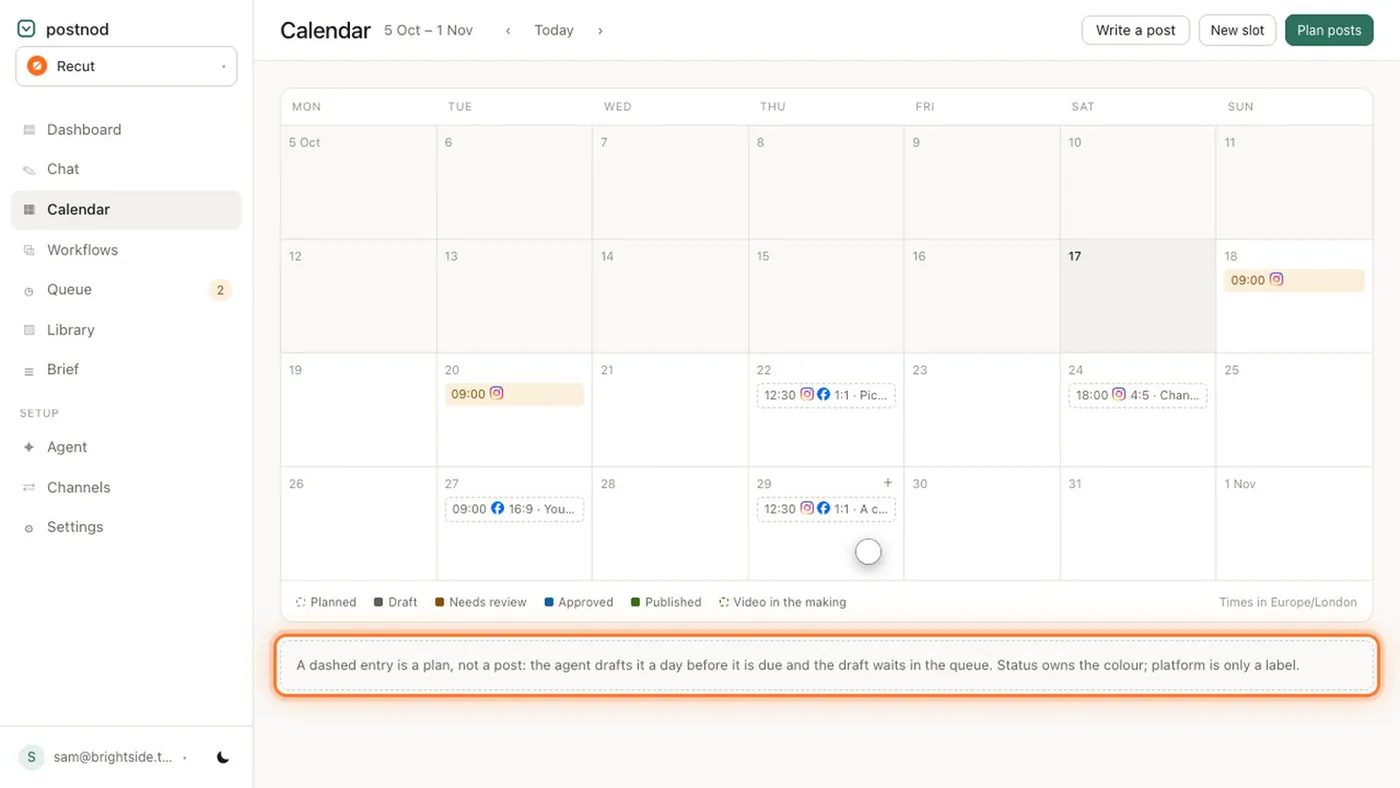
- Put all twelve on a content calendar in one sitting, with dates and formats.
- Write them in a batch, then have a dentist or the practice manager approve them on a different day.
- Keep a consent record next to any post that shows a patient or a member of the public.
Questions people ask
What should a dentist post on Instagram?
Your team, your rooms, plain explanations of what happens at appointments, and practical news like hours and prices. People want to know who they will meet and what to expect.
Can dentists post before and after photos?
Only with the patient’s written consent for that use, and only if the images are genuine and unedited. Never present them as a typical or promised result, and check your regulator’s and advertising rules first.
How should a dental practice reply to a bad review?
Thank them, do not confirm they are a patient or discuss their care, and invite them to contact the practice directly. Take the detail offline.
How often should a dental practice post?
Two or three times a week is a sensible starting point to test. Consistency matters more than volume; see how often a business should post.
Try it on one brand
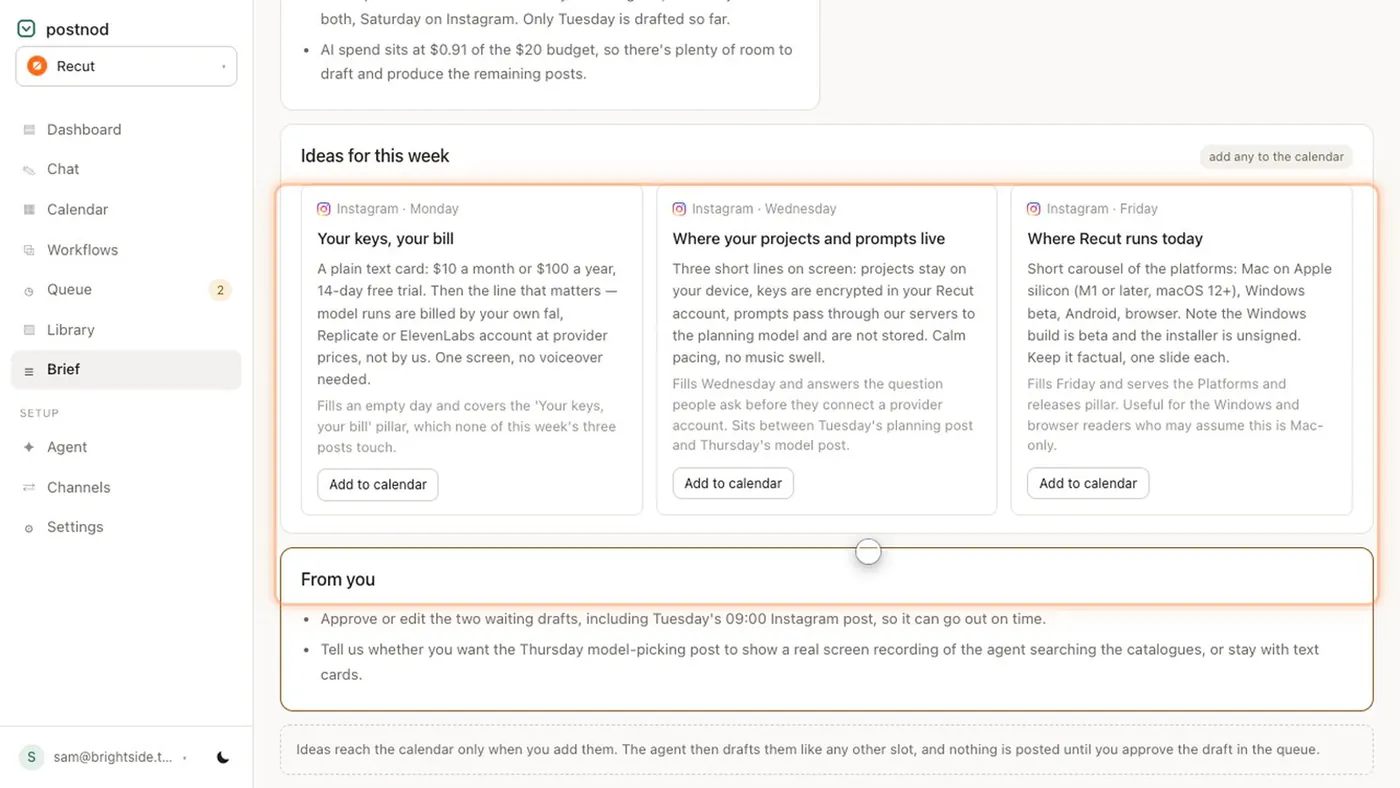
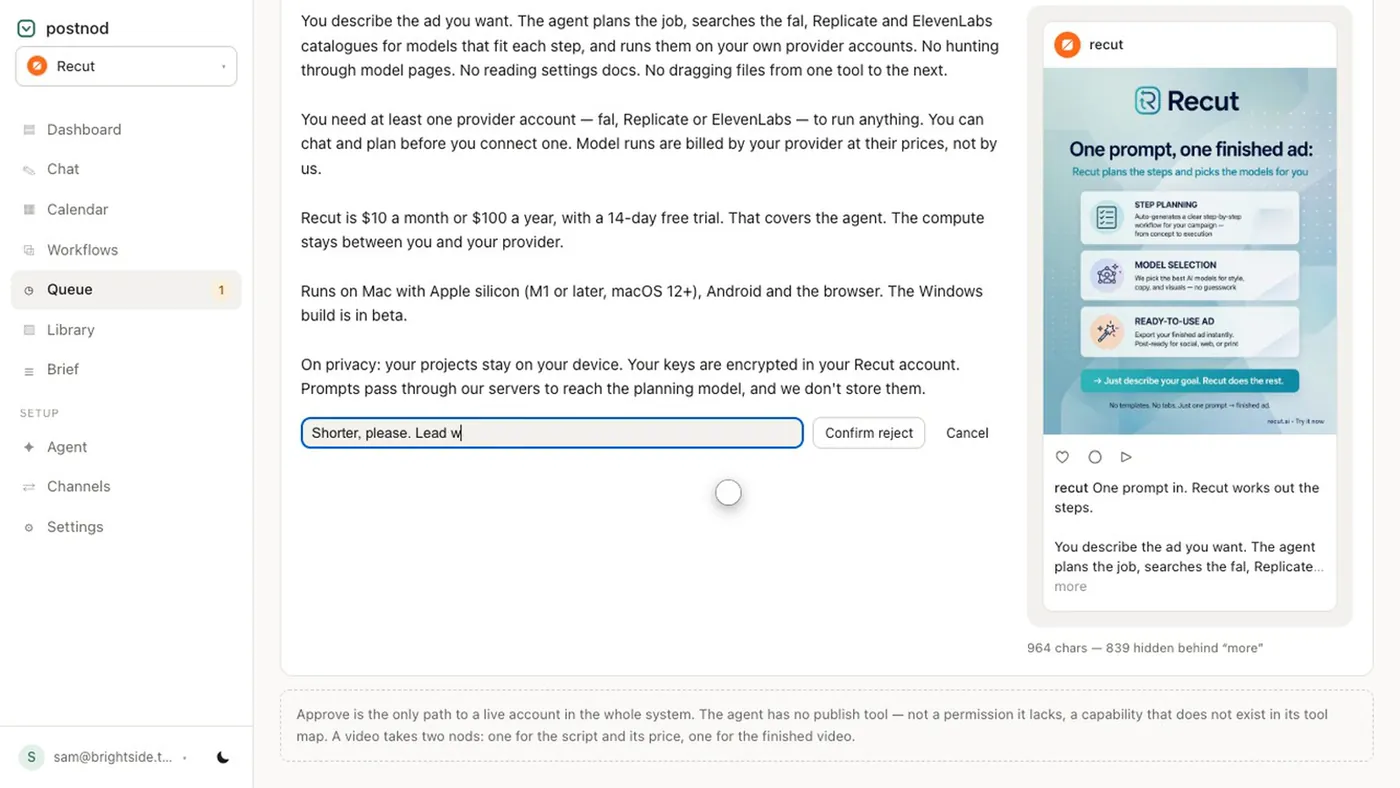
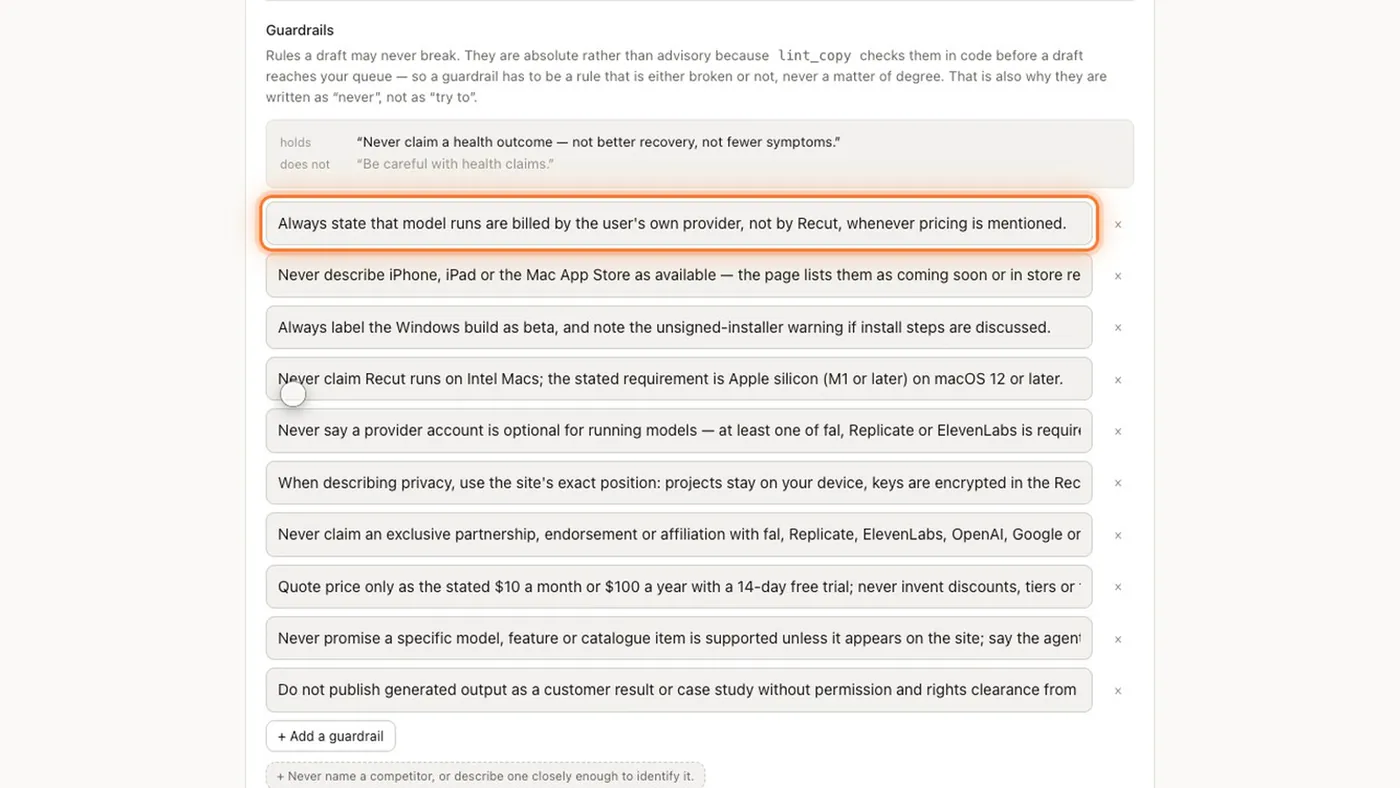
Postnod reads your website, drafts posts in your brand’s voice, checks them against your rules and waits for your nod. Nothing is posted until a person approves it. Free for one brand.
Related guides
 Rules for regulated brandsCan dentists and doctors post patient photos on social media?
 Rules for regulated brandsSocial media guidelines for healthcare: what clinics can postPost ideas by tradeMedical clinic social media posts: 30 ideas that inform
 Planning and calendarsSocial media content calendar: what goes in it and how to build one