Social media posting schedule: how to set one you can keep
A social media posting schedule is the fixed rhythm you post to: how many posts a week on each platform, on which days, at roughly what time. The best schedule is the one you can keep for three months, because consistency is what lets you learn anything from the results.
Start smaller than you think: three posts a week on your main platform and one or two on a second. Pick times when your own customers are likely to be scrolling, treat them as a first guess, and change one thing at a time.
A sample weekly schedule
This is a realistic starting schedule for a small business with one person doing social media for a few hours a week. It is an example to adapt, not a recommendation backed by your data.
| Day | |||
|---|---|---|---|
| Monday | Feed post, morning | Same post, morning | — |
| Tuesday | Stories only | — | Text post, morning |
| Wednesday | Carousel, lunchtime | Same carousel | — |
| Thursday | Stories only | Community or local post | — |
| Friday | Reel or feed post, late afternoon | — | — |
| Weekend | Optional Story | — | — |
That is three Instagram feed posts, two or three Facebook posts and one LinkedIn post a week, with very little duplicated work: the Monday and Wednesday posts go to two platforms at once.
Choosing days and times to test
Published “best time to post” charts are averages across millions of accounts that are not yours. Your audience is what matters. Use these as starting points, then check your own insights after a month.
- Think about your customers’ day. Office workers scroll before work, at lunch and in the evening. Parents often scroll after bedtime. Shift workers vary.
- Post a little before the moment, not during it. A Friday post about weekend plans does better before people have made them.
- Avoid your own busy hours. If you cannot reply to comments for three hours after posting, post at a time when you can.
- Check native insights. Instagram, Facebook and LinkedIn business accounts show when followers are online. That beats any generic chart.
- Change one variable at a time. Move the time or the day, not both, and give it two or three weeks before judging.
Build the schedule, then fill it
- Pick your main platform: the one where your customers already are, not the one you find most fun.
- Decide posts a week per platform. Start with what you could manage in a bad week.
- Fix the days and a usual time for each.
- Turn that rhythm into empty slots on a content calendar for four weeks.
- Fill the slots with topics. A free calendar template gives you twelve to copy.
- Batch the work: write and approve a week of posts in one sitting.
The rule that keeps a schedule alive: when a week goes badly, post fewer, not none. One post on the right day keeps the habit; skipping a week often turns into skipping a month.
Keeping to it
Schedules break for boring reasons: nobody had time to write, the approver was away, or the image was not ready. Scheduling posts in advance solves the first; a named approver with a deputy solves the second; a stock of evergreen posts (how-tos, FAQs, team introductions) solves the third. Review the schedule once a month, not once a day: look at which days and formats got replies and saves, and move one thing for the next month.
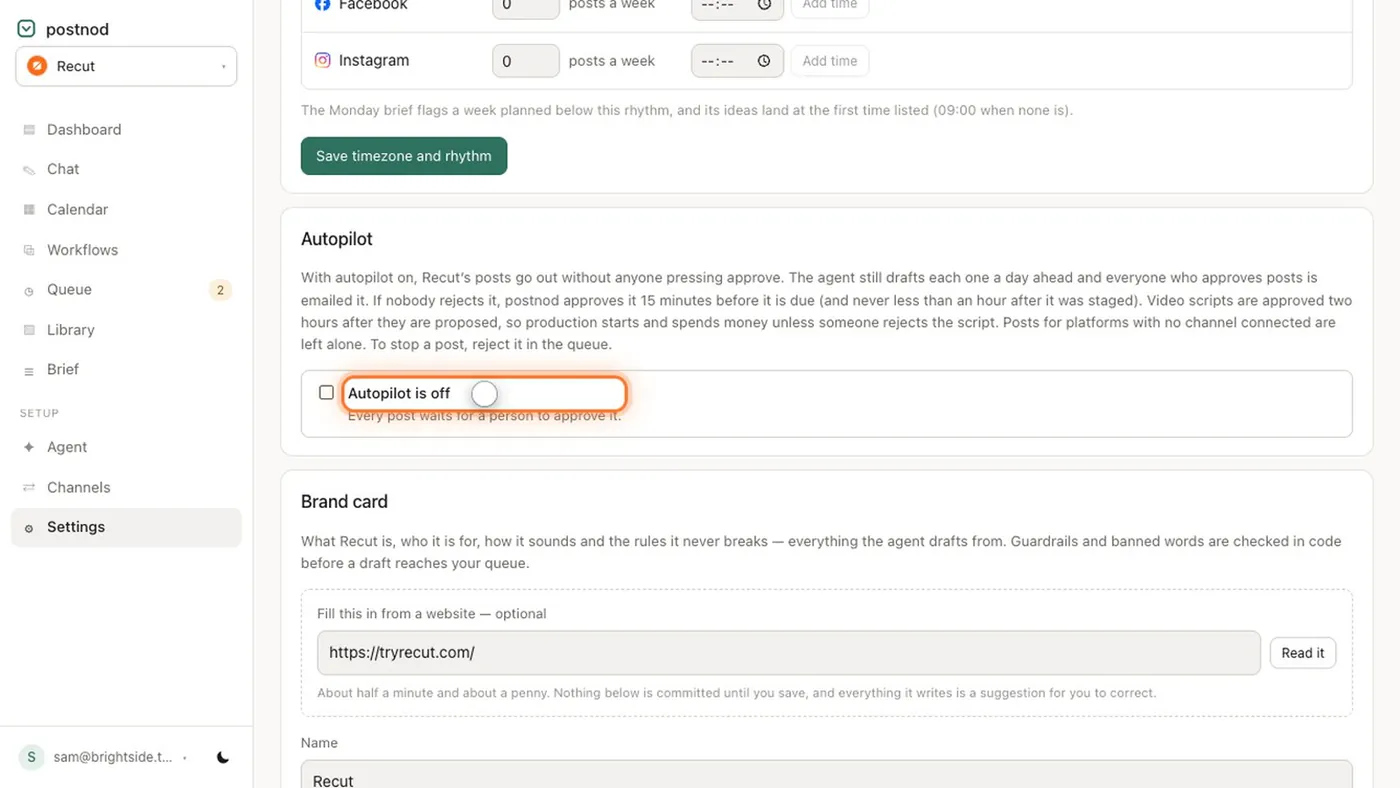
In Postnod you set the rhythm per platform (posts a week and a usual time) in project settings, and the Monday brief flags any week planned below it, so a thin week shows up before it happens rather than after.
Questions people ask
What is a good social media posting schedule?
One you can keep for three months. For most small businesses that is around three posts a week on the main platform and one or two on a second, at fixed days and times.
What is the best time to post on social media?
There is no single best time. Start with when your own customers are likely to be free, check your account insights after a month, and move one variable at a time.
Should I post the same thing on every platform?
Sharing one post to two platforms is fine and saves time. Adjust the caption length and image shape for each; see social media character limits.
Is it better to post daily or a few times a week?
A few good posts a week you can sustain is better than daily posts that stop after a fortnight. See how often a business should post.
How do I stick to a social media posting schedule?
Batch the work: write and approve a week of posts in one sitting, schedule them, and keep a few evergreen posts ready for weeks that go wrong. Post fewer in a bad week rather than none.
Try it on one brand
Postnod reads your website, drafts posts in your brand’s voice, checks them against your rules and waits for your nod. Nothing is posted until a person approves it. Free for one brand.
Related guides
Planning and calendarsHow often should a business post on social media?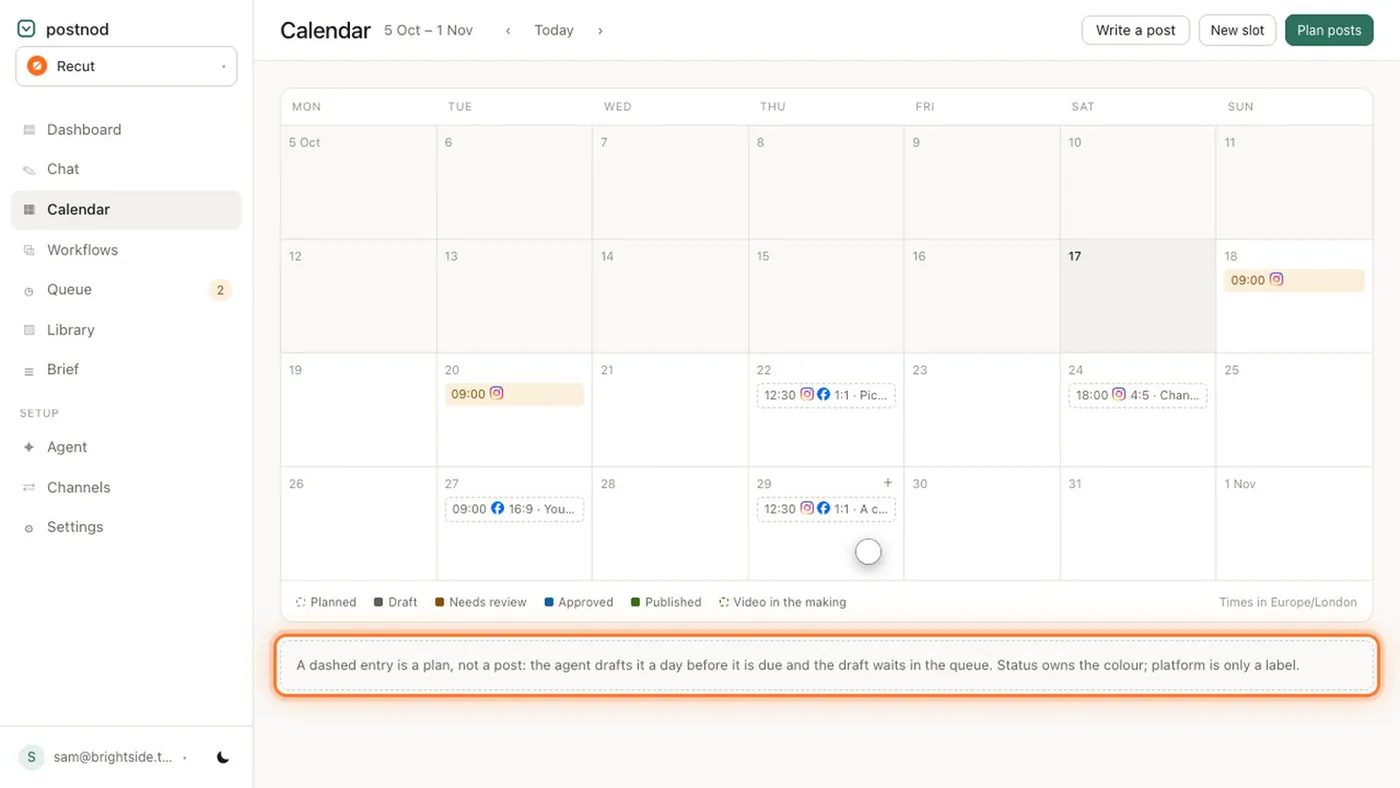 Planning and calendarsSocial media content calendar: what goes in it and how to build one
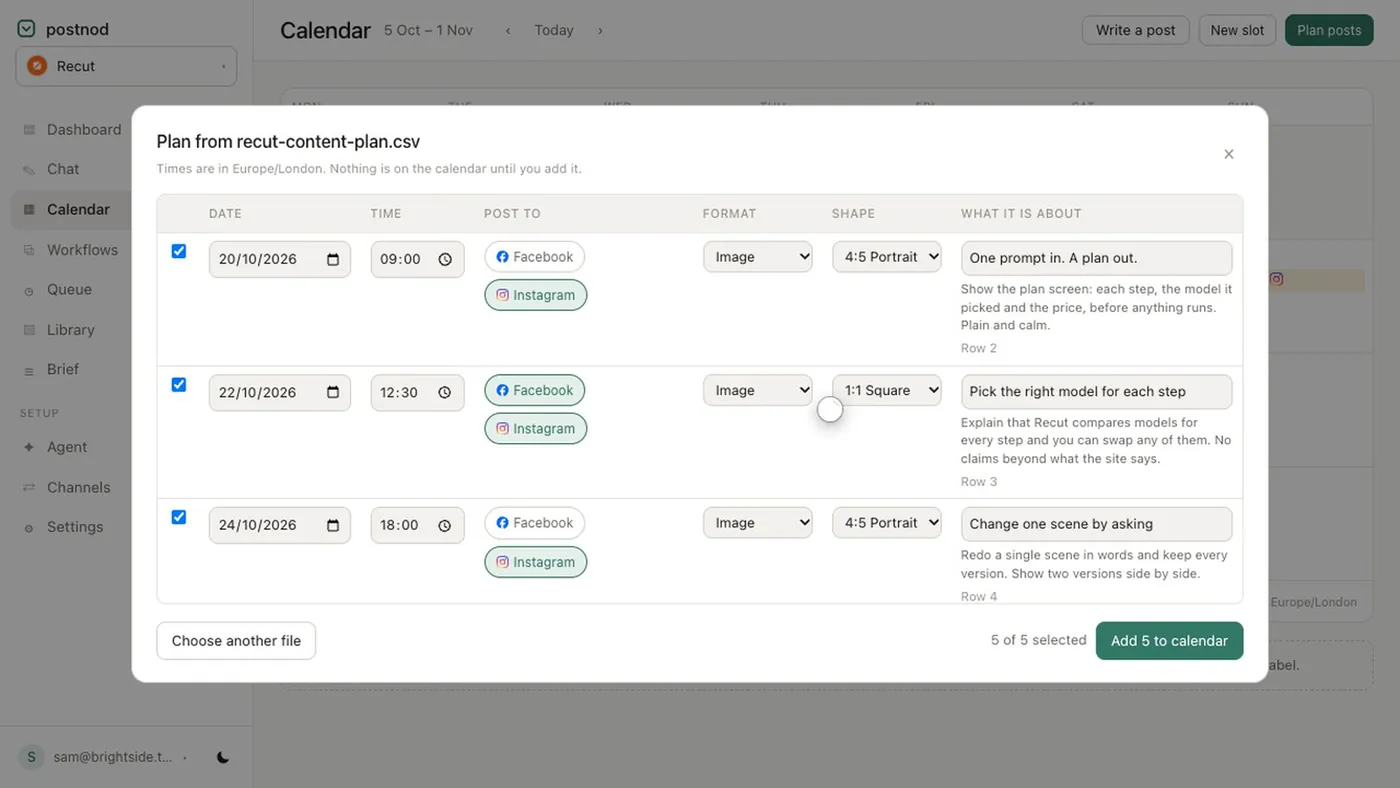 Planning and calendarsFree social media calendar template (CSV for Excel or Google Sheets)
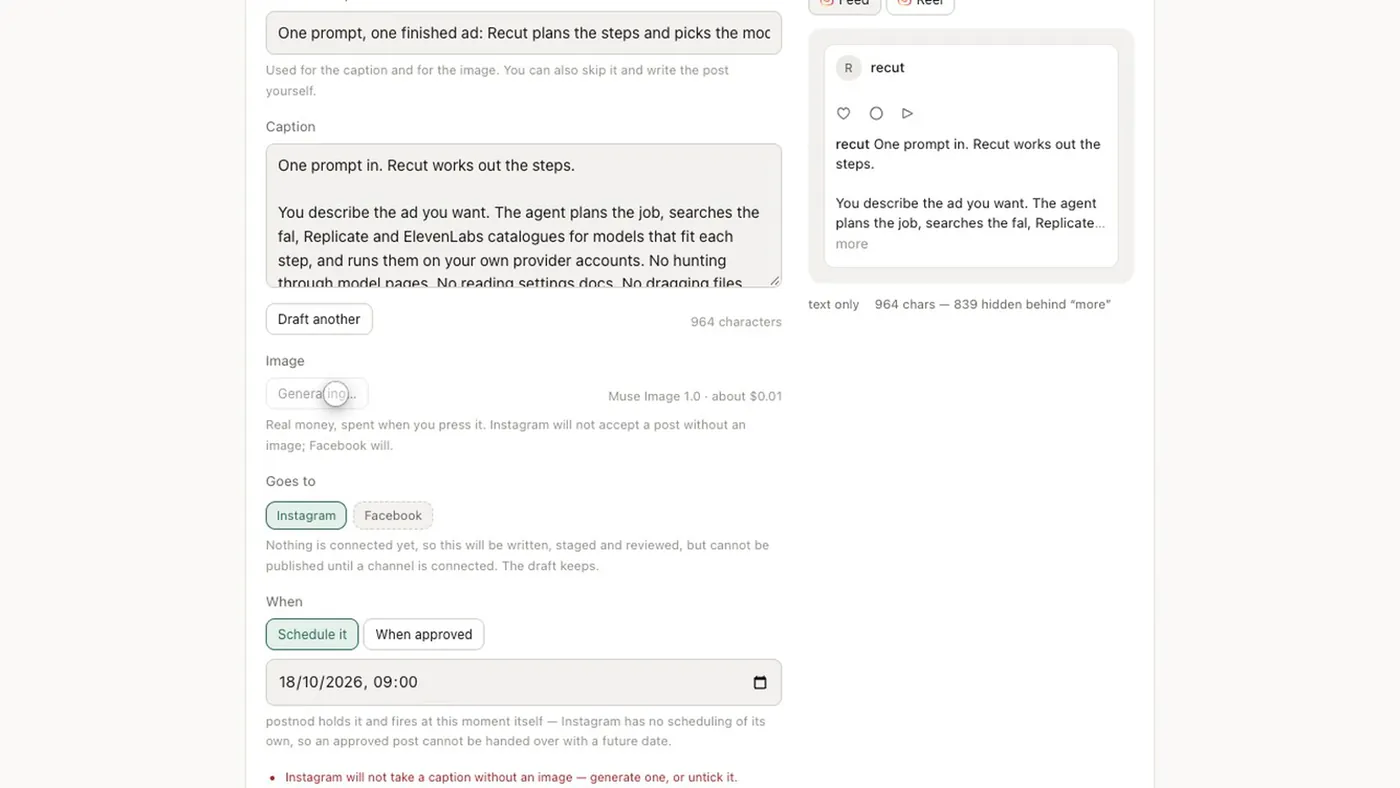 Sizes and character limitsSocial media character limits: every platform in one table